Open the job boards and you will see two titles again and again: BIM Manager (מנהל BIM) and System Coordinator (מתאם מערכות). They sit near each other on every project, people constantly mix them up - and they are genuinely different jobs, with different skills, different days, and different career paths. We have done both on real projects - residential towers, logistics bases, public complexes - so here is the honest breakdown.
The one-sentence difference
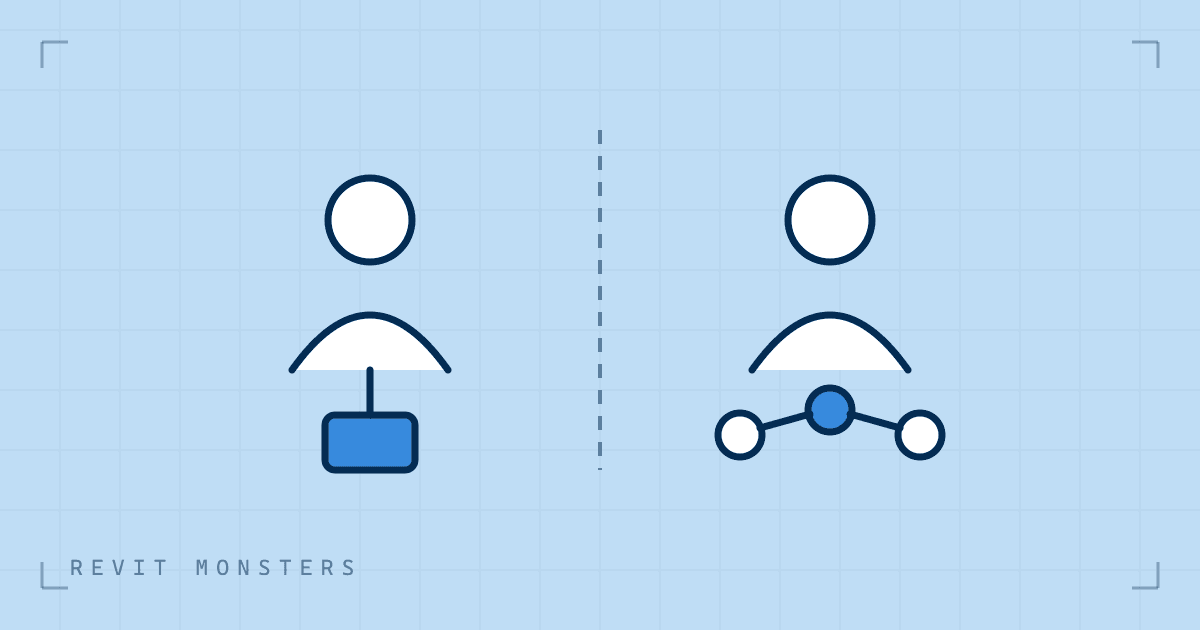
The System Coordinator makes the models of all disciplines work together on a project - finding and resolving the collisions between architecture, structure, and MEP. The BIM Manager makes the whole BIM system work - the standards, templates, software, and people - so there is something worth coordinating in the first place.
One lives inside the federated model. The other builds the world around it.
A day in the life: System Coordinator
Clash detection. The heart of the job. Using tools like Navisworks, the coordinator runs automated checks that find where elements collide:
- Hard clashes - two objects physically occupy the same space. A beam through a duct.
- Soft clashes - everything fits, but too tightly. No clearance to maintain that valve, no room to actually install that pipe.
- Workflow clashes - sequencing conflicts: something gets built before the thing it depends on.
The software finds hundreds. The skill is not running the check - it is filtering the noise: grouping related clashes, deciding which ones matter, and assigning each one to the discipline that has to move.
The coordination meeting. Once or twice a week, all disciplines gather around the federated model. The coordinator runs the room: walks through significant clashes, proposes resolutions, and - the hard part - gets the architect and the HVAC engineer to agree on who moves. This is where you learn the job is 50% technology and 50% diplomacy. The models do not argue with each other. The people do.
After the meeting: documenting decisions, tracking fixes, verifying them in the next model drop.
A day in the life: BIM Manager
The BIM Manager's calendar looks completely different. Less time inside one model, more time making every model on every project behave:
- Standards and the BEP - writing and enforcing the BIM Execution Plan: naming conventions, level of detail, who models what, how files are shared.
- Model health - periodic audits across every project model: file sizes, warning counts, shared coordinates, files that stopped loading. Not an every-morning ritual - a scheduled check, so small problems are caught before they become big ones.
- Templates and families - building and maintaining the office template and the family library, so every new project starts right instead of starting from scratch.
- Software decisions - which Revit version, which coordination tools, which add-ins, when to upgrade (and when absolutely not to, mid-project).
- People - training the team, onboarding new hires, being the escalation point when "Revit is doing something weird" turns out to be something actually weird.
- Management interface - translating BIM into schedules, budgets, and deliverables that project managers and clients understand.
On a small project, one person may wear both hats. On a tower or a hospital, they are absolutely two jobs - and a good manager protects the coordinator from doing standards work, while a good coordinator gives the manager the ground truth from inside the model.
Which role fits you?
Choose System Coordinator if you love the technical depth: you enjoy being inside the model, you like puzzles ("where do we move this duct?"), and you get satisfaction from a clean clash report. You need deep Revit, Navisworks, the ability to read every discipline's drawings - and patience for meetings.
Choose BIM Manager as a goal if you think in systems: you notice when the process is broken, not just the model; you enjoy teaching; and you can talk to management without translating from "Revit" in your head. It is less modeling and more leadership - most managers grew out of coordination first.
The career path
The realistic ladder in Israeli firms: Modeler/Draftsperson → System Coordinator → BIM Manager. You cannot skip the first rung - both roles stand on deep Revit knowledge: families, worksets, shared coordinates, phasing, view templates. Then add a coordination tool (Navisworks is the industry default), learn to read structural and MEP drawings even if you came from architecture, and start volunteering for the coordination tasks nobody wants on your current project.
The technical part takes months. The judgment - which clash matters, who needs to move, how to run a room - comes from projects. Start collecting them.
Our courses are built exactly around this path - Revit fundamentals to real project skills, taught by people who coordinate and manage real buildings. And when you get stuck, the community is there.